


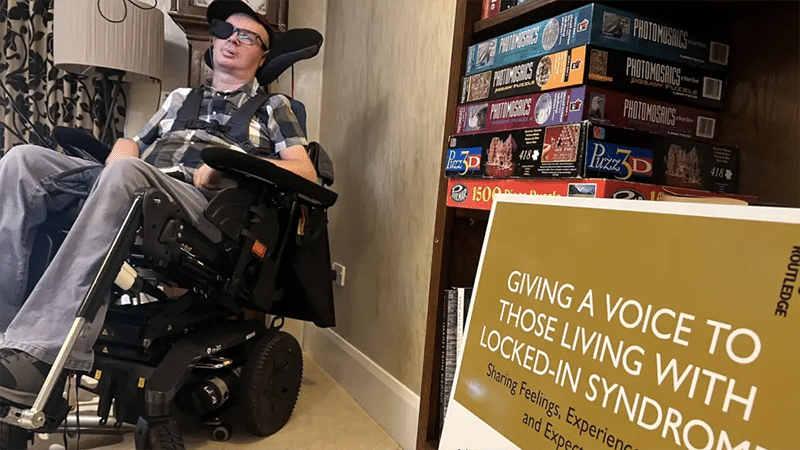
A man with locked-in syndrome has raised concern about people ending their lives in response to a difficult diagnosis.
Bram Harrison, who has been paralysed since he fell off his bicycle in 1998, told journalist Matt Rudd that if he were asked about assisted suicide: “The answer, for the record, would be 100 per cent life.”
But the 48-year-old said that in the early years of his condition, “there is no way on earth I would have been capable of such a decision”.
Life
Bram communicates with his eyes, and he admitted that he is scared “when I think of the countless times I have been misunderstood”.
“Maybe there are safeguards in place but who’s to say how future governments might twist a law to suit a particular situation in the future?”
Also, Dawn Webster, who is 53 years old, became locked-in two weeks after giving birth. She explained that past periods of depression have been helped by changes in care policy.
Although one such change was later reversed, she emphasised that “you keep going, moment to moment, because despite everything that was thrown at you, you are alive”.
Meaning
Last year, neuroscientist Shannan Keen published the book ‘Giving a Voice to Those Living with Locked-In Syndrome’, which features contributions from Bram and other patients.
She said that it was fascinating to read how “his life had unfolded; what happened, how he’d been before he had his accident, the feelings that he had during his recovery, and how he’s managed to move forward with his life and create a really meaningful life for himself”.

‘Cultivating hope: my life with locked-in syndrome’
‘I’m glad you didn’t die Mummy’: locked-in syndrome author shares story