


The Trump Administration has downgraded the risk classification of cannabis products.
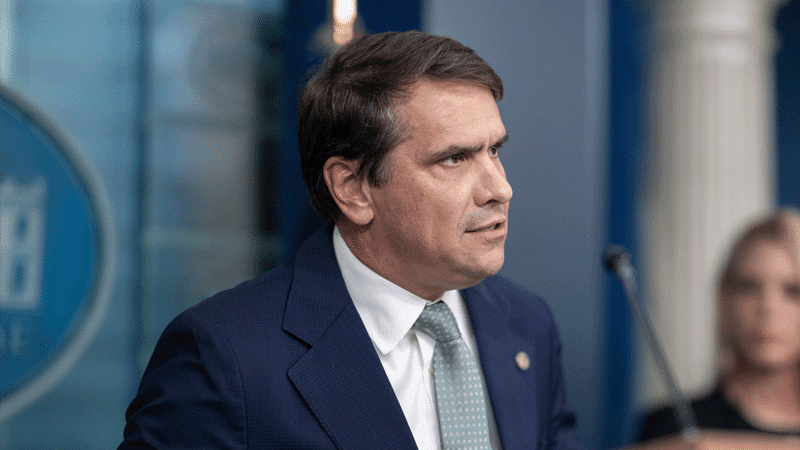
Acting Attorney General Todd Blanche announced the decision to change these products from Schedule I (high potential for abuse with no accepted medical use) to Schedule III (moderate potential for abuse, with accepted medical use).
While cannabis is illegal at the federal level in the US, the Government does not enforce the ban in states that have legalised it for medical or recreational purposes.
The wrong direction
Acting Attorney General Blanche said the classification change “allows for research on the safety and efficacy of this substance, ultimately providing patients with better care and doctors with more reliable information”.
But objecting to the move, Congressman Andy Harris observed: “In addition to the health concerns rescheduling poses, this decision will provide retroactive tax relief for previously criminal activities.”
Arkansas Republican Senator Tom Cotton commented: “A change to marijuana’s drug classification is a step in the wrong direction.”
President Trump promised the change in classification last year, claiming that it “in no way sanctions its use for a recreational drug”.
A step towards legalisation
Morgan Fox, from the National Organization for the Reform of Marijuana Laws, said the change opens up policy conversations on legalising the drug. He noted that lots of policymakers “really won’t even discuss the issue as long as cannabis is Schedule I”.
The CEO of cannabis production company Trulieve, Kim Rivers, told Forbes magazine that this is a step towards full legalisation: “Momentum has been building. This has really been decades in the making.”
She said that cannabis use is “really about personal freedom”, adding: “It’s about wellness, it’s about adults being able to take control of what they’re putting into their bodies that makes them feel better in many cases. And so that’s universal. That’s not anything to do with politics.”
Stunting brain development
The news comes as a new study by researchers in California has linked cannabis use to stunted brain development in teenagers.
Lead author Natasha Wade analysed data of over 11,000 teenagers from the federally funded Adolescent Brain Cognitive Development Study. She stated: “Adolescence is a critical time for brain development, and what we’re seeing is that teens who start using cannabis aren’t improving at the same rate as their peers”.
Wade, who is an Assistant Professor at UC San Diego School of Medicine, found that THC, the psychoactive chemical compound found in cannabis, was “a likely driver” of the slower memory, attention, language and processing speed in the teenagers.
Wade stated: “As cannabis becomes more widely available, it’s important for families and teens to understand how it may affect the developing brain.”
A national survey on drug use by the University of Michigan in 2025 found that over a quarter of 17 to 18-year-olds reported using cannabis in the past 12 months.

Ontario ditches ‘failed experiment’ of drug shooting galleries
Medicinal cannabis ‘worsens mental health’