


Police Scotland is under fire for spending over £7,200 on an LGBT panel, which suggested that officers should be forced to use ‘preferred pronouns’.
The citizens’ panel, which was recruited by LGBT networks on Police Scotland’s behalf, claimed that officers should “ask for pronouns and understand that people may need to be addressed as something different than their legal ID”.
In addition, they claimed that “officers more prone to anti-LGBTQIA+ views” should be “integrated thoroughly and compulsorily in the pro-LGBTQIA+ activities”.
A total of 20 out of the 27 panel members received £360 in gift vouchers, the maximum amount that could be received through attendance, amounting to an overall cost of at least £7,200.
‘Identity politics’
Dr Martin Gallagher, a former Police Scotland superintendent, stated: “Maybe asking for the description of an assailant should be a cop’s priority when speaking to a witness, not the latest fad.”
He remarked that if the police “focused on these basics, rather than ploughing resources and cash from dwindling government allocations into disputed causes, maybe we could be teaching our cops about crime investigation rather than what different rainbow flags mean today, which so often changes tomorrow”.
Dave Marshall, a former chief superintendent at the College of Policing, added: “By engaging in identity politics of this nature, Police Scotland risks reinforcing the perception that it is prioritising one group over others.”
Impartiality
The panel also recommended that “those working at pride events to keep people safe should be in uniform, and those there as part of a Police Scotland float or as individuals should be free to wear t-shirts or similar which identify their connection with Police Scotland”.
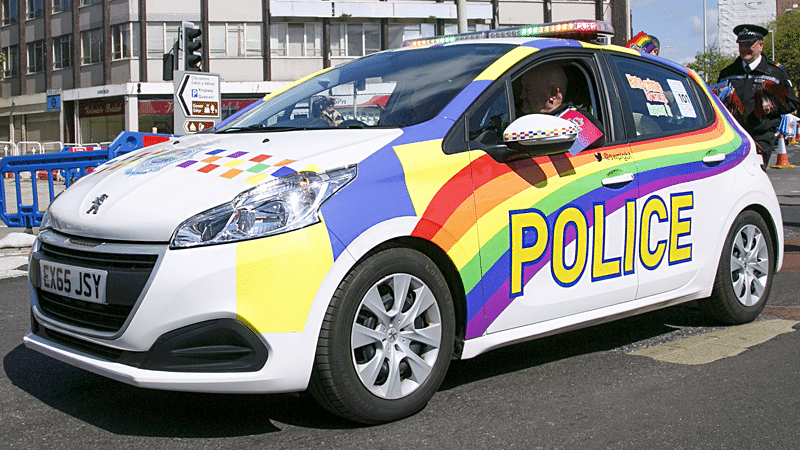
But Police Scotland acknowledged the High Court’s ruling against Northumbria Police, where it was concluded that “they were wrong to have uniformed officers participating in a Pride march under the Progress Pride Flag, as it was seen as compromising the police’s duty to act impartially”.
The Scottish police force has set up an ‘Impartiality in Policing’ review to consider this case in light of its own participation at such events, which it reported may conclude that officers can attend “pride events in a community engagement capacity in the future”.
The Christian Institute’s recent interview with gender-critical campaigner Linzi Smith draws parallels between the Institute’s legal challenge over civil servants officially marching in Pride, in breach of laws on impartiality, and her successful case against Northumbria Police.
Biology
In November, Police Scotland’s Chief Constable confirmed that it would always record suspects’ biological sex in the future, regardless of how they self-identify.
Chief Constable Jo Farrell gave the clarification during an evidence session in Holyrood, in response to a parliamentary petition that called for people accused or convicted of rape to be accurately recorded by their biological sex.
However, Farrell noted that a rapist who identifies as female would still be addressed as their self-identified gender while in police custody, despite official records stating their biological sex.
Met Police apologises to Linehan over trans row arrest
Royal College of Nursing slammed for flying ‘trans pride’ flag