


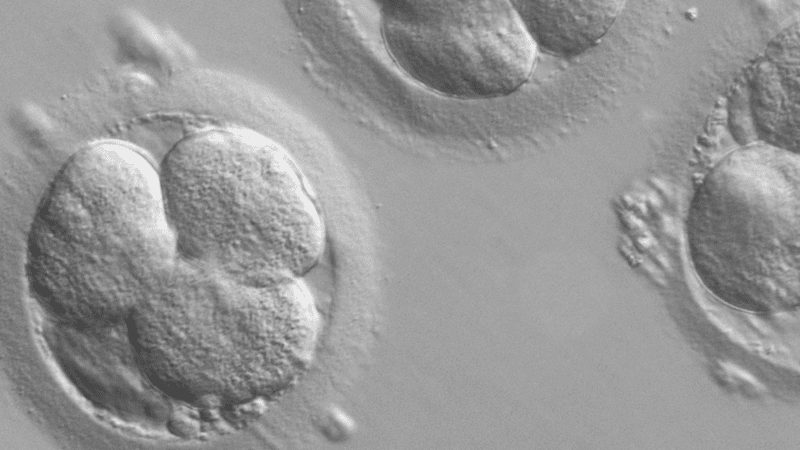
Couples are being invited to pick the embryo that best matches their idea of a perfect child by an American IVF business.
Nucleus Genomics boasts that its software allows parents pursuing IVF to “optimise their embryos” according to various genetic characteristics, including sex, health, intelligence, and appearance.
Its premium $9,999 (£7,300) service enables couples to have up to 20 embryos ‘screened’ for scores of diseases and traits. However, the company acknowledges that all its genetic predictions “are not guarantees”.
Two inches taller
Company founder Kian Sadeghi told CBS News that its product Nucleus Embryo gives you “the full range of insights there is to know about your future child. We really think it’s the parents’ right to know.”
Parents, he said, want us to “play sports and they want us to go to the best school. They want us to be well educated. They want us to thrive. Life, I think, as a parent doesn’t just stop at ‘I want my child to be healthy'”.Nucleus Genomics boasts that its software allows parents pursuing IVF to “optimise their embryos”
He claimed that the technique ’empowered parents’ to give their children the best start in life. But, he added, “if you want 2 inches taller for your child, 3 inches taller, right, if you want a couple IQ-point difference, absolutely, by all means, do that”.
Speaking to The San Francisco Standard, Sadeghi said that he expected genetic optimisation to be seen as just another reproductive technology tool and that it would become commonplace for people to select children on the basis of predicted traits, such as IQ or eye colour.
Illusory
Bioethicists Arthur Caplan and James Tabery advise prospective customers to be wary of the science behind ‘genetic optimisation’, pointing out that “there are no major genetic markers for many cancers or a truly definitive set for heart disease, let alone for intelligence, acne, body-mass index or longevity”.
If the claims were really true, they argued, “then there would be some deep ethical questions to ask about designer babies, the legacy of eugenics and the marketization of children”.Nucleus Genomics boasts that its software allows parents pursuing IVF to “optimise their embryos”
However, they concluded, the dangers lie in “wealthy parents-to-be” investing in a product that offers no control over their children’s biological future, discarding embryos “that don’t appear to be sufficiently optimized”, and the false expectation that children will “live up to their purchased optimized future”.
IVF, or in vitro fertilisation, usually involves removing multiple eggs from a woman’s ovaries which are then fertilised with sperm in a laboratory. One or more fertilised eggs, or embryos, are implanted in the woman’s womb to develop. But unknown numbers — included those deemed to have a chromosomal condition — are frozen, stored and often subsequently destroyed.
Eight GM babies born from ‘three-parent IVF’ in UK
Scientists call for ‘easy access’ to human embryos for experimentation
Fertility watchdog wants ethical ‘blank cheque’ on human embryo research