


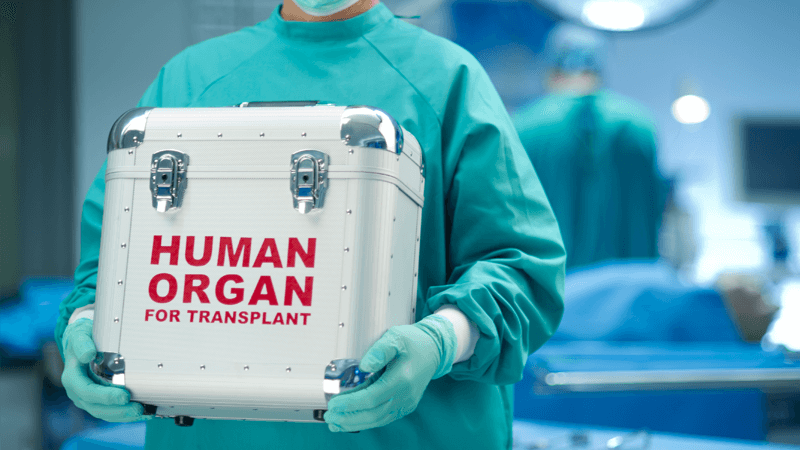
The NHS is urging people to opt-in to the organ donation system after a significant fall in donations under the controversial ‘presumed consent’ model.
Following a nine per cent drop in donors last year, NHS Blood and Transplant (NHSBT) has called for “urgent action”, blaming the decline on families refusing consent for their loved one’s organs to be removed for transplant.
Across the UK, a presumed consent scheme is in place to allow a person’s organs to be donated unless they explicitly opt-out or their family object to the procedure following their relative’s death. Despite this, the scheme has had little impact since its introduction.
‘Saving lives’
NHSBT Director Anthony Clarkson said: “saving lives and reducing the waiting list needs collective effort across the NHS and society.
“There is a simple action the public can take to help save lives. Please sign the NHS organ donor register. Most of us would accept an organ if we needed one but opportunities to save lives are being lost because families didn’t know what their loved ones wanted. Leave them certain.”
The Health Secretary, Yvette Cooper, added: “Lives are saved and thousands of people get the chance of a new lease of life thanks to organ transplants, but that is only possible because of the kindness and compassion of those who register as organ donors.
She urged people to “register their decision online and talk to their families about their wishes”, concluding: “It only takes two minutes, but one day in the future, it could save someone else’s life.”
New life
There are currently 8,700 people in need of an organ donation, according to the NHSBT.
Matthew Smith, who was diagnosed with a terminal lung condition in 2023, shared how he had to wait almost a year before he received news that an organ was available.
His wife, Nicola, said that on the day of the surgery: “I think I cried from when he went in until he came out. It’s the start of a new beginning. It’s a new life”.
Nicola urged people to think about organ donation, saying: “You’re giving somebody the chance of a new future”.
Underlying wishes
Before the introduction of the ‘presumed consent’ model in England, researcher Magda Osman, of Queen Mary University of London, warned that it would not be effective.
She explained that families would find it harder to judge people’s “underlying wishes” if consent was presumed: “If you don’t actively choose and you are listed as a donor on the register, then it isn’t clear if you really wanted to donate your organs.
“This matters if in the event of death your relatives have to decide what to do.
“They may veto the organ donation if they can’t tell for sure what your underlying wishes were.”
Medics push for ‘death by organ donation’
Mum ‘blown away’ by life-saving blood transfusion for her baby in the womb
Ethical stem research offers hope to those with ‘juvenile parkinsonism’