


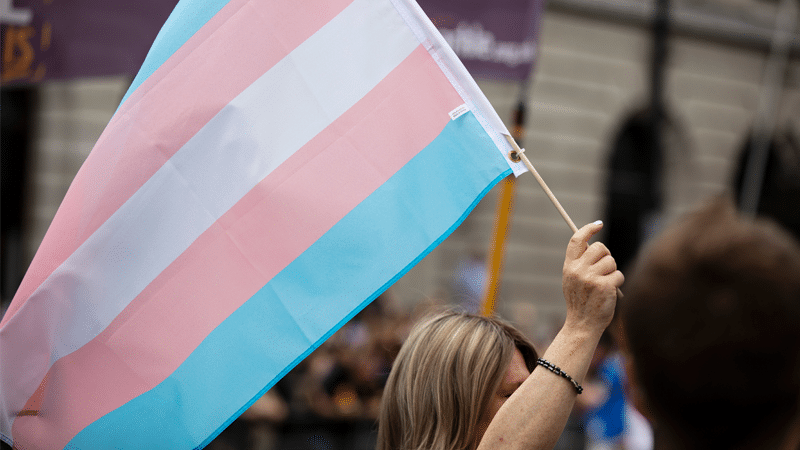
The National Student of Students (NUS) has called for students to subvert official statutory guidance protecting single-sex spaces, claiming it is “trans-exclusionary”.
NUS Vice President for Liberation and Equality Avery Greatorex, a man who identifies as a woman, dismissed the Equality and Human Rights Commission’s (EHRC) Code of Practice as legally biased and “ideologically motivated”.
The Code of Practice, which applies to services, public functions and associations, has recently been updated to ensure compliance with the Supreme Court’s ruling that ‘sex’ in the Equality Act 2010 refers to biological sex.
A fact of life
Greatorex encouraged students “to resist trans-exclusionary policies in the public spaces and services they frequent” in an effort to “keep our spaces trans-inclusive”.
Students were urged to put posters on women’s toilet doors stating that ‘men are welcome’, to push single-sex societies to change their membership requirements, and to lobby universities to allow trans-activists to co-design new policies.
Trade unions including Unite, the British Medical Association and Equity have also criticised the Code. Unison, with around 1.3 million members, recently vowed to take the fight “to every workplace to make them trans inclusive”.
But Fiona McAnena of gender-critical group Sex Matters, branded what she described as the “mad rush by unions to prioritise the feelings of trans-identifying men over the rights of women to safety and dignity in the workplace” as a “shocking scandal”.
She observed: “Many of them have failed female members in their hour of need, including women who have been hounded from workplaces for saying that biological sex is a fact.”
Transwomen are men
After lengthy delays, an amended version of the EHRC’s Code of Practice for England, Scotland and Wales was approved in May and completed parliamentary scrutiny last month.
The document states that if “a service provider (or a person providing a service in the exercise of public functions) admits trans people to a service intended for the opposite sex” then it cannot rely on exceptions to sex discrimination laws and may be acting unlawfully.
“This means that if a service is provided only to women and trans women or only to men and trans men, it is not a separate-sex or single-sex service under the Equality Act 2010.”
In relation to the Act, it specifies that “a person’s sex remains their biological sex”, regardless of whether they have a Gender Recognition Certificate.

Trans activists launch ‘how-to’ intimidation guide
Academics back equality expert ‘deplatformed’ by trans activists