


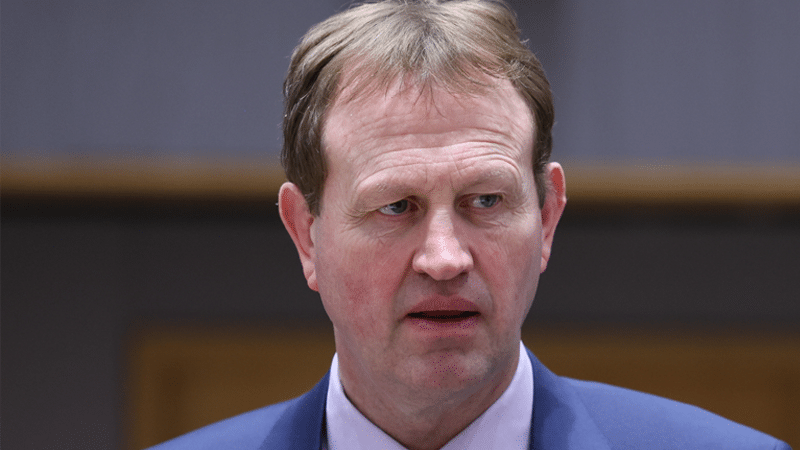
The Minister for Justice, Home Affairs and Migration has noted that assisted suicide is “very complex, requiring careful consideration of medical, ethical and cultural issues”.
Responding to a question by David Cullinane TD, Jim O’Callaghan TD explained that the Government has not decided on any action in response to the 38 recommendations proposed by the Joint Oireachtas Committee on Assisted Dying.
In 2024, Dáil Éireann voted 76 to 53 to acknowledge the Committee’s final report. The document called for assisted suicide to be introduced for adult Irish citizens deemed to be suffering ‘intolerably’ from a terminal illness and with less than six months to live – or twelve months for neurodegenerative conditions.
‘Challenging issues’
Mr O’Callaghan emphasised that the matter, which is now before the Government, also gives “rise to challenging issues in the areas of criminal justice and constitutional law”.
Posting on X, Senator Rónán Mullen reflected on his experience as part of the “dissenting minority” in the Committee.
“Our draft report was hastily-debated and the time for discussing amendments very limited before the whole thing was voted through. We failed to emphasise that the vast majority of doctors and other healthcare personnel here are opposed to introducing euthanasia/assisted suicide.
“The best response to our report may well be to ignore it. Which is what the Government (rightly) appears to be doing.”
I was in the dissenting minority on the Oireachtas ‘Committee on Assisted Dying’. Our draft report was hastily-debated and the time for discussing amendments very limited before the whole thing was voted through. We failed to emphasise that the vast majority of doctors and other…
— Senator Rónán Mullen (@RonanMullen) August 11, 2026
Palliative care
Last year, palliative care consultant Dr Regina McQuillan spoke to the Irish Times about the problem with assisted suicide from an end-of-life care perspective.
During Palliative Care Week in September 2025, themed “Living for today, planning for tomorrow”, she explained that that assisted suicide “creates the idea that for some situations, death is a solution to some problems”.
She suggested that it should be viewed as “a societal response to distress”, as “research shows that most people look for assisted suicide or euthanasia when they lose independence”.
The doctor criticised discriminatory attitudes towards disabled people and reasoned that people need help to live well, rather than viewing a life dependant on care as one not worth living.

Euthanasia ‘case reports’ in Canadian province riddled with errors
German doctor who murdered patients convicted as a serial killer
PM: ‘Assisted suicide should not be debated until palliative care is fixed’