


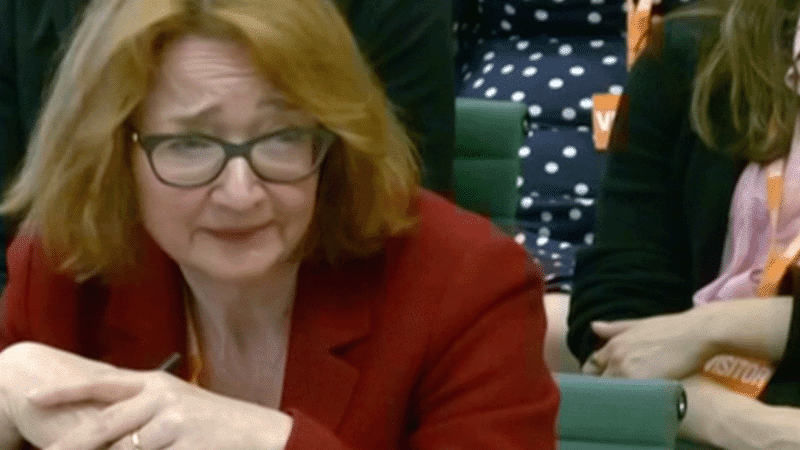
The Chairwoman of the Equality and Human Rights Commission (EHRC) has dismissed claims that protecting women’s spaces “erodes” the rights of those who identify as the opposite sex.
Writing in The Times, Mary-Ann Stephenson warned that criticism of the watchdog’s Code of Practice has actually increased “distress” in some, following false claims that it “strips trans people of their rights, bans them from public spaces and requires sex checks at public toilets”.
Instead, she emphasised that the guidance recognises “women’s need for access to single-sex services” while not removing protections from “discrimination, harassment and victimisation”.
Women’s concerns
The Code of Practice, which applies to services, public functions and associations, came into force in August to aid compliance with the Supreme Court’s ruling confirming that ‘sex’ in the Equality Act 2010 refers to biological sex.
The document states that if “a service provider (or a person providing a service in the exercise of public functions) admits trans people to a service intended for the opposite sex” then it cannot rely on exceptions to sex discrimination laws and may be acting unlawfully.
Stephenson said: “We must also recognise the distress of women unable to access single-sex facilities. Women who believe that their right to privacy, dignity or safety have not been properly protected deserve to have those concerns taken seriously too.
“Recognising women’s need for access to single-sex services doesn’t require us to dismiss the rights of trans people. And recognising the vulnerability of trans people doesn’t require us to dismiss women’s concerns.”
She emphasised that instead of spreading misinformation, those who disagree with the guidance must “be clear about what change they are proposing, and how this would impact on single and separate-sex spaces”.
Domestic abuse
Last month, trans activists heckled a woman petitioning her local council to protect single-sex spaces for victims of domestic abuse.
Former Haringey Councillor Emina Ibrahim had to be escorted from the building for her own safety as protestors directed abuse at her from outside the council chamber.
She related her own experience of being put in temporary accommodation after her mother fled from domestic abuse, saying: “I remember women and girls having to stand guard at bathroom doors for one another, simply to protect our collective dignity.”
The campaigner explained: “Single-sex provision isn’t an incidental feature of VAWG [violence against women and girls] services. For many women, it is an essential part of feeling safe enough to disclose what has happened to them, to rebuild trust, and to begin recovering from trauma.”

Trade unions ‘put women’s rights in jeopardy’ by supporting gender self-ID
Civil service under pressure to ‘break the law’ on single-sex spaces
‘Put patient safety before gender ideology’, Senedd urges amid NHS row