


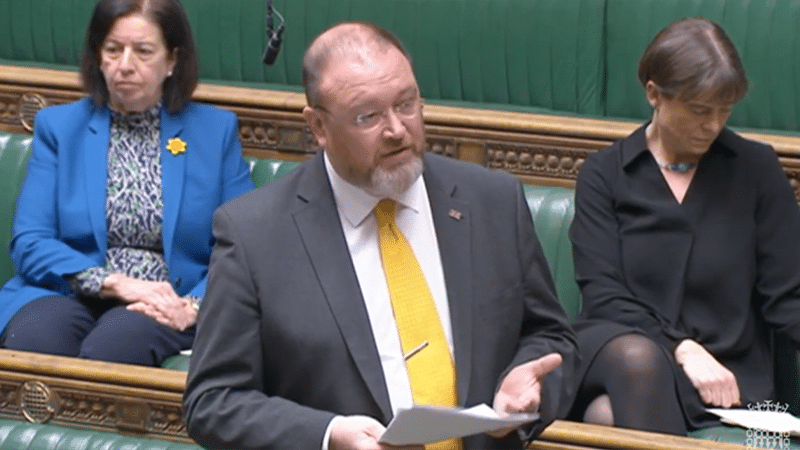
A former UK Government Minister has reflected on how suffering a spinal stroke led him to consider the risk of coercion under Liam McArthur MSP’s assisted suicide Bill.
Writing in The Scotsman, David Duguid explained that his temporary paralysis and reliance on a ventilator provoked him to “think differently about dependence, vulnerability, and the subtle forms of pressure – spoken and unspoken – that people in fragile situations might face”.
The former Scottish Conservative MP for Banff and Buchan said his sympathy with the principle of assisted suicide did not require him “to support this particular Bill”, and warned that the eligibility criteria could be later expanded to “include people with life-changing disabilities”.
‘Slippery slope’
He said: “People, often through circumstance, can be vulnerable to pressure, expectation or internalised guilt. Safeguards that appear robust on paper can be far more fragile in real life.
“This is why concerns about the so-called ‘slippery slope’ cannot be dismissed. In other jurisdictions, eligibility has expanded beyond initial intentions, through legislation or court rulings. What had begun as an exceptional end-of-life measure was allowed to become something broader, with consequences not originally envisaged.”
Duguid called for MSPs to consider the “overwhelming concern” indicated by surveys of the Royal College of Physicians and Surgeons of Glasgow surrounding “coercion, assessing capacity, and defining terminal illness. Many doubt that safeguards would be practical or workable in reality.”
“Changing one’s position between stage one and stage three is not weakness or inconsistency. It can be an entirely responsible response to risks that remain unresolved.”
Change of mind
Last month, Audrey Nicoll MSP announced her withdrawal of support for McArthur’s Bill.
As a former police officer and convener of Holyrood’s Criminal Justice Committee, the SNP MSP explained that her experience with the “most vulnerable” in society convinced her that changing the law would result in some people being coerced into an assisted suicide.
The Assisted Dying for Terminally Ill Adults (Scotland) Bill, which would allow those deemed to be terminally ill who have been resident in Scotland for at least twelve months to get help from a medic to kill themselves, passed Stage 1 by 70 votes to 56.
Several MSPs said they only voted in favour of the proposals to allow time for debate; with Nicoll’s withdrawal of support, only six more need to follow suit for the Bill to fall at the next vote.

Woman fast-tracked for euthanasia after husband’s ‘caregiver burnout’
‘My cancer battle exposed the hidden danger of assisted suicide’