


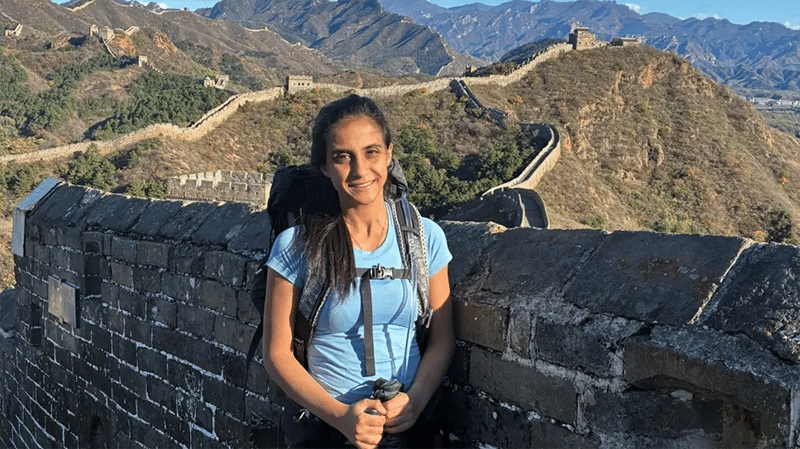
A woman has completed a nine-day hike along the Great Wall of China to mark a decade of recovery from anorexia.
Sarah Zurub, a thirty-one-year-old junior doctor, was diagnosed with an eating disorder as a teenager and spent three years in hospital. At one point she recalls being given only two weeks to live.
Before setting off on the adventure, Zurub told the Coventry Telegraph: “The NHS saved my life. I will always be forever grateful. I’m forever indebted. They didn’t give up on me, especially my consultant. I begged to die and he kept me alive”.
Hope
On completing the challenge, which raised £4,000 for the eating disorder charity Beat, Zurub said: “I had endless years of therapy and seeing the dietician, then I lost a friend from anorexia, and slowly I decided that I needed to get myself well.”
She explained that she had decided to pursue a career in medicine “to give back to all the doctors that saved my life”, adding: “Everyone deserves that chance at recovery”.
“Even when you’re at your lowest and you’re at complete despair and you don’t think it can ever get better, it can.”
Assisted suicide and anorexia
In September, MPs defeated Lauren Edwards’ Terminally Ill Adults (End of Life) Bill by 286 votes to 270.
Under the proposals, people with eating disorders would have been allowed in certain circumstances to receive help from medics to kill themselves.
In a briefing paper published shortly before the vote, academics at King’s College London warned that people with eating disorders “reluctant to take even lifesaving medications” could be brought “within scope of the Bill”.
They also reported that a person with anorexia “may develop complications such as heart failure, renal failure and liver failure. These conditions, once they develop, could be understood as progressive physical illnesses which fall within the Bill’s definition.”
‘Eating disorders are treatable’
In 2024, a study revealed that cases of euthanasia and assisted suicide for eating disorders such as anorexia nervosa have been documented in multiple countries.
Researchers found that between 2012 and 2024, at least 60 patients with eating disorders received medical help to kill themselves in Belgium, the Netherlands, and the United States.
Of the nineteen case notes available for analysis, all were women, one third were under 30, and 89 per cent exhibited depressive symptoms.
Study authors Chelsea Roff and Dr Catherine Cook-Cottone said: “The idea that patients with eating disorders are untreatable, treatment-resistant, or unable to recover has no place in medicine.”
Leadbeater Bill could see assisted suicide for patients with eating disorders
Canadian euthanasia regime guilty of ‘rushing people to their deaths’