
Private Members’ Bill ballot: could an assisted suicide Bill return?


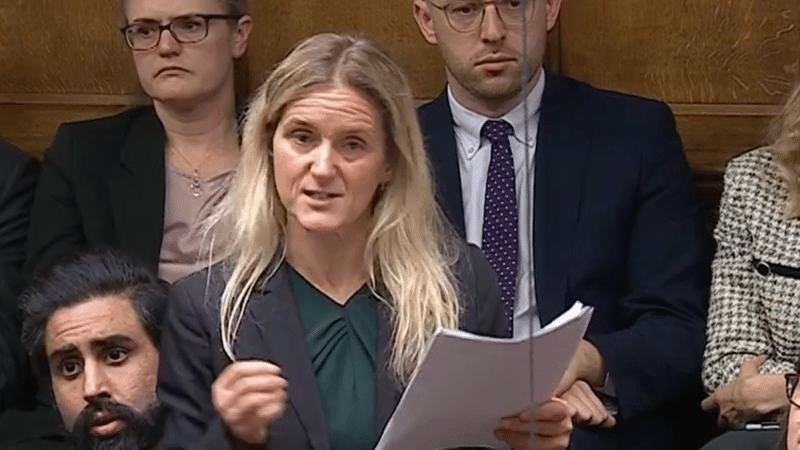
The ballot for the Private Members’ Bills has taken place, and of the more than 400 backbench MPs who entered, 20 names have been drawn.
These 20 will have the opportunity to propose new legislation and have it debated in the hope it will become law. However, the majority of these will only receive a very short amount of time in Parliament, and have little to no chance of developing, and so are used merely to highlight issues instead.
In practice, an MP must rank in the top few in the ballot to have any realistic chance of their proposal becoming law. Even then, it is usually only simple, tightly-worded Bills aimed at addressing a specific, narrow issue, that make it through the parliamentary process, given that Government business always takes precedence over Private Member’s Bills.
Kim Leadbeater (above) came top of the ballot last session, meaning she had the maximum time available of any Private Members’ Bill. But even with the particularly long parliamentary session, she was unable to push through the deeply complex and controversial legislation.
The votes
The 20 MPs successful in this year’s ballot were:
Sir Desmond Swayne (Conservative)
Lauren Edwards (Labour)
Mike Wood (Conservative)
Andrew George (Liberal Democrat)
Dr Luke Evans (Conservative)
Sir John Whittingdale (Conservative)
Jessica Toale (Labour)
Dr Neil Shastri-Hurst (Conservative)
Gareth Snell (Labour)
Lincoln Jopp (Conservative)
Patricia Ferguson (Labour)
Robert Jenrick (Reform UK)
Damian Hinds (Conservative)
Alistair Strathern (Labour)
Clive Jones (Liberal Democrat)
Victoria Atkins (Conservative)
Munira Wilson (Liberal Democrat)
Steff Aquarone (Liberal Democrat)
Mr Paul Foster (Labour)
David Pinto-Duschinsky (Labour)
Of the top seven MPs whose Bills will definitely receive a Second Reading, three voted against Kim Leadbeater’s Bill, and four voted in favour. Sir Desmond Swayne, who topped the ballot, was an outspoken critic of the Bill, and will not bring it forward.
Andrew George, who placed fourth, was a supporter of the Bill, and complained when members of the House of Lords took time to appropriately scrutinise the legislation, accusing them of filibustering. After the draw, he said assisted suicide “is there as a possibility” to bring forward, but that he “probably has a dozen subjects” he could sponsor in a Private Member’s Bill.
Fast-tracking
George did also say, however, that should he sponsor a new assisted suicide Bill, he feels “it’s important the House of Commons demonstrates to the House of Lords we are not prepared to put up with the abuse of power we saw when they aborted the Bill only weeks ago”.
This indicates a preference to invoke the Parliament Acts, and this is something that Lord Falconer, co-sponsor to Kim Leadbeater’s Bill, threatened on multiple occasions. Any MP taking up the baton on assisted suicide could choose to pursue the same route.
In a nutshell, a new Bill would have to be more or less identical to the Bill that was voted through by the House of Commons in June 2025, though it may incorporate some amendments that have been made by the House of Lords since. If MPs vote in favour of it, and then Peers try to reject or change it, the Commons can bypass the House of Lords and push through a virtually unchanged Bill.
However, this too is complicated and carries a high level of risk for supporters of the new Bill. Because if any changes are made by MPs at Committee Stage, then the Bill would no longer qualify under the Parliament Acts, and so it would still face the same level of scrutiny in the House of Lords and could be changed or rejected by them. But if no changes are made, the legislation would be less likely to be passed by MPs again, given the huge flaws that have been highlighted by the House of Lords. Many MPs only voted to send the Leadbeater Bill to the House of Lords because they expected Peers to make amendments to improve the workability and safeguards.
But it is not simply the Parliament Acts that could be invoked. There are number of different strategies MPs could use to try to pass a new Bill without the scrutiny it will inevitably require. The Christian Institute will contact its supporters as and when they can make an impact.
To receive regular updates from us, including on how you can get involved with our work, sign up to our mailing list.