
‘A life changed, a church revived, a nation reformed, a world evangelised.’


COMMENT
Sharon James will be leading the Church History track at the FIEC event Rising Lights, 6–10 April 2026 in Torquay. She will be speaking about four individuals (including Auguste Hermann Francke) who experienced personal renewal and then an increased passion for revival in their church, their nation, and the world.
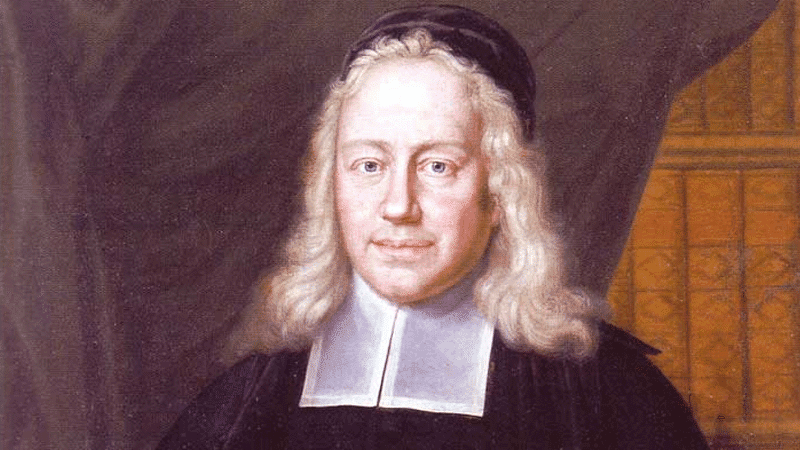
The year was 1687, and Auguste Hermann Francke was due to preach in the leading Lutheran church in Luneburg, Germany. Aged 24, he had studied theology for seven years, read the Bible in the original languages, and set up Bible study groups for students.
But the more he pondered his text, John 20:31, the more he was troubled. Did he himself believe in the Son of God? Did he know Christ? He became convicted of the awful truth. After early professions of piety, he had lapsed into worldliness.
He later wrote: ‘For twenty-four years I was nothing better than an unfruitful tree… I loved the world, and the world loved me… I grasped heaven with one hand and the earth with the other, I wished to enjoy fellowship with God and the friendship of the world at the same time, and could hold neither properly.’
Francke knelt and pleaded with God to save him, and later testified: ‘I had bent down with great sorrow and doubt, but arose again with inexpressible joy and great assurance. As I knelt I did not believe there was a God. As I arose I would have confirmed it without fear or doubt, even with the shedding of my blood. I arose a completely different person from the one who had knelt down.’
Filled with joy, he wanted everyone in his community, his nation, and the world, to join him in praising God, who is worthy of all praise.
And he wanted to see revival in the church. Martin Luther had nailed his Theses to the church door in Wittenberg in 1517, but in subsequent years Lutheranism had been impacted by nominalism. As an established, territorial church, joining the clergy was seen as a good career option.
Francke’s passionate zeal went down badly with the establishment. He was expelled from the Universities of Dresden and Leipzig, and from the church in Erfurt where he was a deacon.
In 1691, he was offered a post as Professor of Greek and Oriental Languages at the newly formed University of Halle, and the pastorate at the church of St George in Glaucha, a suburb of Halle. The spiritual and social conditions were dire. Numerous orphans lived on the streets; there was no schooling for poor children. Vice prevailed.
Many would have been daunted. But Francke had experienced the supernatural work of the Holy Spirit in his own life. Even as he sought to grow in Christlikeness himself, he knew that the Holy Spirit could change the lives of others.
He preached five sermons a week, catechised the youth, and held Bible studies. Grieved at the plight of children on the streets, he invited them into his own home to receive Christian education.
As he aimed daily for personal revival and church renewal, he also aimed for reformation in the community. After 35 years of ministry in this place, by the time of his death in 1727, spiritual and social conditions had been transformed.
Trusting God for funds, Francke had built an orphanage which housed 134 children, all of whom were provided with education and taught a trade. Around 160 other children, and 250 poor students, were provided with free meals each day. He founded schools for girls, as well as boys, attended by around 2,200 pupils.
Francke directed a printing press and publishing house, which circulated two million Bibles and a million New Testaments throughout Europe. Missionaries were sent from Halle to India, where they translated and distributed the Bible in Tamil and set up a training institution for local ministers.
At the university, Francke taught generations of pastors, emphasising a changed life. His students had to attend fellowship groups with mutual accountability, as well as lectures.
Francke’s personal mission statement was: ‘A life changed, a church revived, a nation reformed, and a world evangelised.’ Surely this should be our heart desire and prayer also.
This article first appeared in Evangelical Times and is reproduced here with permission.
By Sharon James, Social Policy Analyst