
Unwearied mercy: John Howard, Christian prison reformer


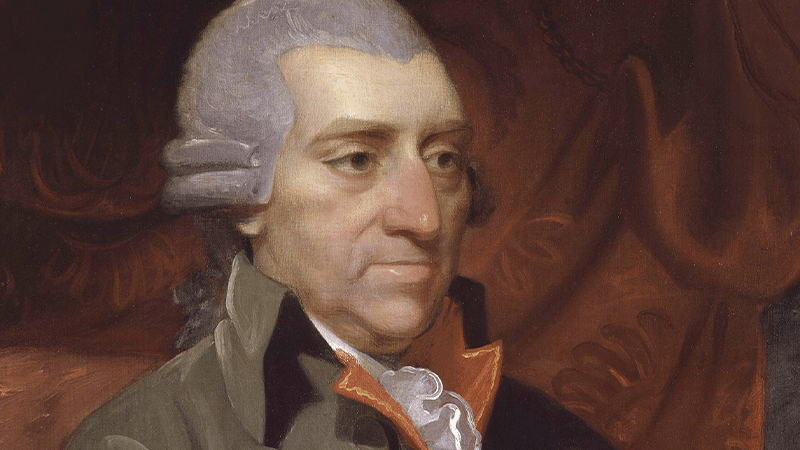
‘Foul and fetid’: These were the words Christian philanthropist John Howard, born on this day 300 years ago, used to describe the prison conditions of his day, as he campaigned for their reform across the UK and Europe.
Howard’s father was a wealthy upholsterer, and upon his death, the newly moneyed son used his fortune travelling. However, on one excursion to Europe, he was caught by French privateers and imprisoned in a French prison, introducing him to the horrendous conditions faced by inmates there.
After his release, Howard secured the freedom of other British prisoners held there by urging the Government to act.
He went on to travel across the UK, Europe and beyond, recording the conditions of prisons and campaigning for their improvement with significant success.
Correcting injustice
In 1774, Howard became the High Sheriff of Bedfordshire. Among his responsibilities was overseeing the county jail which he described as “foul and fetid”.
He was particularly troubled by the practice of prisoners having to pay a fee for their board and keep, and being reimprisoned until payment was made, which left many trapped in the squalid conditions long after serving their time. Jailers were funded from these payments.
Howard implored Parliament to introduce numerous reforms, including a paid salary for jailers, an end to fees for prisoners, and a requirement for jails to be regularly cleaned and for healthcare to be provided.
But the reformer was not a soft touch. His philosophy was that prisoners should face hard labour, but that this should be paired with religious instruction, believing that prisons should promote reform and rehabilitation alongside punishment, rather than punishment alone.
He greatly praised the prisons in Holland, which he said were “so quiet, and most of them so clean, that a visitor can hardly believe he is in a gaol”.
He noted: “Great care is taken to give them moral and religious instruction, and reform their manners, for their own and the public good. The chaplain (such there is in every House of Correction) does not only perform public worship, but privately instructs the prisoners, catechises them every week etc., and I am well informed that many come out sober and honest. Some have even chosen to continue and work in the house after their discharge.”
Speaking truth
Howard became famous internationally for his work campaigning for improvements to prisons, and for his written works setting out the conditions he found them in.
He toured around different countries visiting prisons, often incognito, to assess their true state, even trying to enter the infamous Bastille, though he was found and escorted out by a guard.
In Vienna, Howard was scolded by the English Ambassador for criticising the Emperor’s prison policy, out of fear that word would get to him. Howard replied: “Shall my tongue be tied from speaking truth by any king or emperor in the world? I repeat what I said and maintain its veracity.”
Emperor Joseph II of Austria requested a meeting with Howard, where he told him his complaints to his face. The Emperor said of him: “In truth, the little Englishman is without ceremony or compliment, but I like him the better for it.”
‘Thou art a candidate for eternity’
Howard’s lifelong campaign for reform was steered by his deep-rooted faith in God, which he wrote of in his diaries. In a visit to Holland, he described how he longed for union and communion with God: “O shout! My soul – grace, grace! Free, sovereign, rich and unbounded grace! Not I, not I, an ill-deserving, hell-deserving creature, but when sin abounds I trust grace suprabounds – even I have still some hope – what joy in that hope! – that nothing shall separate my soul from the love of God in Jesus Christ”.
And upon safe arrival in Lyon later that year, he praised God for his “unwearied mercy and goodness” and reminded himself “to cultivate and maintain a thankful, serious, humble and resigned frame and temper of mind. May it be the chief desire that the honor of God – the spread of the redeemer’s Name and Gospel – may be promoted.”
It was his hope that his travels investigating and researching prison conditions in Europe would return him to England “not only wiser, but better”, explaining he wishes to have “a cheerful humility – a more general love and benevolence to my fellow creatures – watchful of my thoughts, my words, my actions – resigned to the will of God, that I may walk with God, and lead a more useful and honorable life in this world”.
A diary entry in 1770 while in Naples could be the mantra adopted by any Christian: “My highest ambition the honor and glory of God… Stop; remember thou art a candidate for eternity. Daily, fervently, pray for wisdom. Lift up thine heart and eyes unto the Rock of Ages – and then look down upon the glory of this world. A little while longer and thy journey will be ended. Be thou faithful unto death. Duty is thine, though the power is God’s.”
A better world
Howard died of the plague in the Russian Empire in 1790 aged 63 after caring for sick casualties of the war in Kherson, now in modern day Ukraine, during his final trip.
An inscription on a monument in the city, declares that Howard “united in his character many virtues, each worthy of a memorial. All springing from the Faith and animated by the Charity of a Christian.”
Jeremy Bentham, a prominent atheist, fellow social reformer, and friend of Howard, said of him: “His was the truly Christian choice; the lot in which is to be found the least of that which selfish nature covets, and the most of what it shrinks from. His kingdom was of a better world: he died a martyr after living an apostle.”
Edmund Burke, another friend and reformer, once said: “Howard will receive, not by retail, but in gross, the reward of those who visit the prisoner”.