2025 has been one of the busiest years on record for The Christian Institute, with multiple campaigns on the go and various pieces of legislation we’re working on all progressing through Parliament at the same time.
But whether we were championing the value of the lives of the unborn, speaking out against the evils of assisted suicide, standing up for the ordinary work of churches, or defending Christian believers, God has enabled us to remain steadfast against the tide.
Assisted suicide
This issue has dominated our campaigning more than any other in the last twelve months.
In January, scrutiny on the assisted suicide Bills in Holyrood and Westminster commenced, with evidence sessions launched in Scotland on Liam McArthur’s Assisted Dying for Terminally Ill Adults (Scotland) Bill, and Committee stage beginning in the House of Commons for Kim Leadbeater’s Terminally Ill Adults (End of Life) Bill.
Some of Kim Leadbeater’s decisions at Westminster caused particular controversy, as the list of witnesses selected to appear before her Committee was criticised for being “heavily skewed” towards those favouring assisted suicide. And a vote against hearing evidence from the Royal College of Psychiatrists caused such an outcry that, within hours, Leadbeater was forced to add the group to the witness list.
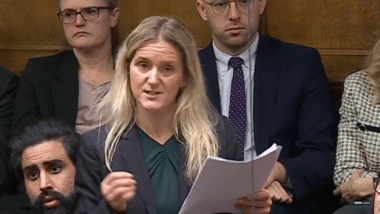
Kim Leadbeater MP
The controversy continued when, in February, she scrapped a measure she had repeatedly described as the ‘ultimate safeguard’. The MP had said a High Court judge would need to approve a person’s request to be killed, but ditched the role after finally conceding her plan was unworkable. She replaced this judge with a panel that she described as ‘judge plus’, which would include a ‘legal expert’, a social worker, and a psychiatrist. But she later admitted the panel is not a judicial entity.
March saw the Isle of Man’s Parliament pass its own Bill to legalise assisted suicide. The proposal, which allows residents deemed terminally ill to be given lethal drugs to end their own lives, was voted through the Tynwald, and could come into effect early in 2027.
Following a debate in May that lasted less than five hours, MSPs voted 70 to 56 in favour of Liam McArthur’s assisted suicide Bill to allow terminally ill patients to get help to kill themselves, no matter how long they might have left to live. When being further examined by MSPs in November, almost no safeguards that were put forward as amendments to the Bill were accepted, as MSPs considered almost 300 amendments over just four days of debate. At the upcoming Stage 3, only seven members need to change their vote to prevent it becoming law.
In June, Kim Leadbeater’s Bill for England and Wales was narrowly voted through the House of Commons, despite passionate opposition exposing its lack of protections for the most vulnerable. The Christian Institute promised to keep fighting against the Bill as it progressed to the House of Lords. As the Lords began their examination of the legislation, they spoke out two to one against the Bill. When it reached Committee stage, expert witnesses called to give evidence largely criticised the Bill – a theme which continued as Peers considered amendments in November and December. Over 1,000 amendments were tabled – so many that the Government added ten further days to consider the Bill. The sessions will continue into April. If scrutiny is not complete before Parliament rises for the King’s Speech — expected in May — the Bill will fall.
And as the year drew to a close, leaked documents revealed that, before the 2024 General Election, the Labour Party considered that it could use its influence to introduce assisted suicide. According to a policy document, the party argued that it would be able to “heavily influence” a Private Member’s Bill to legalise the practice by lending Government support and providing parliamentary time.
Gospel Freedom
In March, we announced we are assisting retired pastor Clive Johnston, who is being prosecuted for holding an open-air Sunday service in an abortion censorship zone. The former pastor was cautioned by police in July 2024 after preaching on John 3:16 near Coleraine’s Causeway Hospital. The 76-year-old did not mention abortion and was separated from the hospital by a dual carriageway, but was charged with seeking to ‘influence’ those accessing abortion services.
In December, Pastor Clive pleaded not guilty during his trial, and after hearing evidence, the judge has deferred judgment. The case is set to resume in March.
The Christian Institute was also busy this year preparing a new resource for evangelists on their rights and responsibilities when preaching on the streets, which was launched in November.
The Street Preacher’s Charter sets out legislation relating to public evangelism, and provides guidance on good practice, enabling preachers in England and Wales to engage with the public and police with confidence.
Rights and responsibilities when street preaching in England & Wales
The Christian Institute has produced this helpful guide for street preachers. It is written in the form of a Charter, a document which enshrines duties and responsibilities alongside reciprocal rights and privileges. It also provides an overview of relevant laws. The purpose is to encourage good practice whilst discouraging behaviour which might give street preaching a bad name.
At the end of March, a leading human rights lawyer warned that plans for a ban on so-called ‘conversion therapy’ in Northern Ireland could result in parents being imprisoned for refusing to go along with their child’s wish to try to change gender. Under a proposed Bill, parents and church leaders could face unlimited fines and up to seven years in prison, for being involved in alleged conversion practices. But in a legal opinion for the CI, Aidan O’Neill KC said the plans are a “disproportionate intrusion” into the home, freedom of religion and freedom of expression.
Civil Service
This year, The Christian Institute also launched legal action against the Civil Service over its public support for Pride. We notified the Cabinet Secretary of our intention to seek judicial review of Civil Service participation in Pride events, and its wider endorsement of LGBT ideology, arguing that the practices breach rules on impartiality.
In December, lawyers for The Christian Institute lodged High Court papers commencing legal action against the PM, as Minister for the Civil Service, over this official, taxpayer-funded participation in Pride marches.
Transgenderism
At the start of the year, the Government rejected calls from pro-trans activists to re-examine the Cass Review’s recommendations for gender-confused children. The Department of Health and Social Care said the Government and NHS England are “fully committed” to implementing the Review.
The Supreme Court ruled in April that the terms ‘sex’, ‘man’ and ‘woman’ in the Equality Act refer to biological sex and not gender preferences, even with a gender recognition certificate. In a unanimous decision, the UK’s highest court ruled against Scottish Government guidance, which allows men who identify as women to take women-only positions on company boards.
The following week, the Scottish Government announced it fully accepts the judgment. Consequently, the Social Justice Secretary told Holyrood that the SNP Government has no plans to bring back its controversial Gender Recognition Reform Bill, which would have allowed sixteen-year-olds to change their legal sex by self-ID.
Abortion
Pro-life campaigner Isabel Vaughan-Spruce was told by police in February that her “mere presence” near an abortion centre was causing harassment. The Co-Director of March for Life UK was told by an officer that she could not silently stand within a Government-imposed censorship zone, simply because she holds “anti-abortion” views.
In June, MPs voted to further liberalise abortion law, approving Tonia Antoniazzi’s amendment to the Government’s Crime and Policing Bill. If the Bill becomes law, a woman will be allowed to kill her unborn baby at any stage of pregnancy, without sanction. A doctor will not lawfully be able to provide an abortion to a woman after the limit because medics will still be subject to criminal sanctions if they participate.
And September saw an estimated ten thousand pro-life supporters unite in support for the unborn, at the UK’s March for Life in London.
Education
In May, Peers urged the Government to abandon plans to introduce an “intrusive” home education register. Under the Children’s Wellbeing and Schools Bill, parents must not only provide their names and addresses, but the amount of time each child spends “receiving education from each parent”, and anyone else who educates their child. The Bill is still being debated in the House of Lords.
As the summer began, the Department for Education published guidance for schools in England on Relationships, Sex and Health Education, but removed the minimum age limit for teaching sex ed. A draft version by the previous government had stated that children could not be taught about sex before age nine, or explicit sexual acts before 13. However, helpfully, the revised guidance does make clear that parents will have the right to see all materials taught in RSE lessons.
It also said that: “Where schools decide to use external resources, they should avoid materials that use cartoons or diagrams that oversimplify this topic, that could be interpreted as being aimed at younger children, or that perpetuate stereotypes or encourage pupils to question their gender.”
The DfE also released guidance on safeguarding which was also largely helpful as it recognised the risks of ‘social transitioning’. It no longer claims that being ‘transgender’ is “not in itself an inherent risk factor for harm”, and draws attention to the Cass Review’s recommendations on social transitioning, emphasising the need for clinical advice, especially for younger gender-questioning children.
In a shocking denigration of faithful Christians, Justin Welby said in July he was “being thick” when he had held to the Bible’s teachings on sexual ethics. When asked about the Church of England’s decision to approve same-sex blessings, while refusing to allow ‘gay marriage’, Welby claimed ‘faithful’ same-sex relationships are “a huge blessing” to those involved and society, adding, “I was being thick” to have ever thought otherwise.
In August, the Church in Wales announced that a woman in a same-sex civil partnership has been elected its next Archbishop. Cherry Vann describes herself as “openly lesbian”, and is Patron of a pro-LGBT group that affirms people “of every gender identity and sexual orientation”. Following her appointment, she told The Guardian that “Gay marriage in church is inevitable, I think: the question is when.” However, she acknowledged that “a good proportion” of Church in Wales’ clergy were opposed to the idea on theological grounds.
At the beginning of October, Dame Sarah Mullally was nominated as the next Archbishop of Canterbury. She is the first woman to take on the role in the Church of England’s nearly 500-year history. Dame Sarah describes herself as pro-choice, and in 2023 said “stable, faithful relationships” between two men or two women could be blessed.
In the wake of the announcement, the Global Fellowship of Confessing Anglicans, which represents more than seventy-two million members, announced that it rejected her authority, saying she has “repeatedly promoted unbiblical and revisionist teachings regarding marriage and sexual morality”.
Republic of Ireland
The Christian Institute has expanded its work in the Republic of Ireland, holding 23 meetings and meeting around 900 supporters in 2025.
In March, we produced a guide for Christian parents about the changes to how Relationships and Sexuality Education (RSE) is taught as part of wider changes to Social, Personal and Health Education (SPHE). We warned that some of the changes risk promoting an ‘anything goes’ sexual ethic and the idea that a person’s gender can somehow be independent of their biology. But there are lots of good educational and legal reasons why schools must not go down that road, and parents have a vital role in helping ensure schools make good decisions.
Changes to SPHE have already taken place for pupils who started Junior Cycle in September 2023. For Senior Cycle, the changes began in September 2024 and are to be implemented for year 5 from September 2027. Changes in primary schools began in September 2025.
In June, the Irish government recommitted to outlawing so-called conversion therapy, despite the previous Government pushing back plans for a new law, admitting that the process was fraught with legal difficulties.
Under its National LGBTIQ+ Inclusion Strategy II, the coalition promised to ensure a ‘conversion practices’ ban is operational before the end of 2026.
But it also resisted EU pressure to enact draconian hate speech laws. The European Commission threatened the nation with legal action if it does not introduce further restrictions on free speech, which would be more extensive and wide-reaching than Ireland’s current rules. But MEP Michael McNamara asked the Commission to back down, calling the efforts “fundamentally misguided”.
At the end of September, an estimated 25,000 people marched in Dublin to proclaim Jesus as King. The march was organised by Pastor John Ahern from All Nations Church in Dublin. He described them as “an evangelical initiative, not an ecumenical one”, aiming to proclaim the love of Christ through public witness, worship, and prayer. Another event took place in Belfast, with around 8,000 present.
At the end of October, Ireland elected Catherine Connolly as its new President. Connolly campaigned for the legalisation of same-sex marriage, defended the controversial Gender Recognition Act, and is in favour of a ban on ‘conversion therapy’. She also voted to repeal the Eighth Amendment, removing a key protection for unborn children.
Free Speech
Free speech advocate Charlie Kirk was shot and killed while speaking to students at Utah Valley University in September. In the wake of the tragedy, the young father’s Christian faith and the need for greater respect for free speech was highlighted.
And just before Christmas, the Chair of the College of Policing announced that the police intend to scrap ‘non-crime hate incidents’ (NCHIs), in favour of a ‘common sense’ approach. NCHIs are recorded by the police when a complaint is made by someone who alleges a hate incident has taken place, and are based on the perception of a victim or others, not on evidence. These differ from hate crime offences because no actual crime has been committed. The recommendation will be included in a review to be published in the new year.
Lord Young of Acton, General Secretary of the Free Speech Union, thanked The Christian Institute’s supporters for their role in securing the important change.
At the end of May, the Mayor of London pushed for the UK Government to consider decriminalising cannabis possession. Sadiq Khan, knighted in June, claimed the London Drugs Commission’s (LDC) new report “makes a compelling, evidence-based case for the decriminalisation of possession of small quantities of natural cannabis which the Government should consider”.
The LDC, which Sir Sadiq established, claimed the Class B drug should be moved from the Misuse of Drugs Act to the Psychoactive Substances Act. The Home Office said it had “no intention” of reclassifying the Class B drug.
Gambling
During September, campaigners united to call on the Government to do more to curb the damage done by gambling. More than 150 MPs, Peers and campaigners held a summit to discuss how gambling impacts society, and what must be done to change the industry.
Marriage and the family
In November, a Christian Institute review found no evidence to conclude that mild smacking causes children harm. The review analysed 37 peer-reviewed studies on the relationship between smacking and negative outcomes. Data showed correlation is small, inconsistent, and does not prove causation.
Later, proposals to make divorce quicker and easier in Northern Ireland were largely rejected by respondents to a consultation, including the CI. Department of Finance officials said support for a so-called no-fault divorce system “was in a minority”, with around two thirds preferring “no change to the current law”.
In Memoriam
In July, long-serving pastor and celebrated Bible teacher John MacArthur died, aged 86. Through his media ministry, oversight of The Master’s Seminary, and training of church leaders and pastors overseas, MacArthur will be primarily remembered as an expository preacher who had, as Grace Church recalled, “an unwavering commitment to declare God’s truth”.
Author and Pastor Voddie Baucham went to be with his Lord and Saviour in September. Baucham was a powerful preacher, and served many years as a pastor in Texas and then as Dean of Theology at the African Christian University in Zambia.
And in November, the CI’s Chair of Trustees, Revd Dr Richard Turnbull, was called home after a short battle with cancer, aged 65. Richard was a father, minister and author, who often spoke of his love for the Institute’s staff. He routinely taught them, and prayed with them and for them.
The year ahead
In 2026, many of these issues are likely to continue to need our expertise, particularly in the early part of the year as the Bills at Westminster and Holyrood come to a head.
Thank you to everyone who has joined with us in being a Christian influence throughout 2025. Whether writing to your elected representatives, responding to a consultation, or getting involved with your child’s school, it makes a big difference. Your prayers and support have been invaluable to us in this challenging year. We give thanks to God and trust him to provide for us, and for you, in the year ahead.